What Is Skinner's Superstition Experiment? The Pigeon That Spun Counterclockwise for Its Dinner
One pigeon turned counterclockwise around its cage, two or three spins between every meal. Another kept jamming its head into the same upper corner. Neither move did anything, and both birds acted as if their dinner depended on it. That's the short answer to "what is Skinner's superstition experiment": in the late 1940s, B.F. Skinner fed hungry pigeons on a timer that ignored whatever they were doing, and most of them invented rituals anyway.
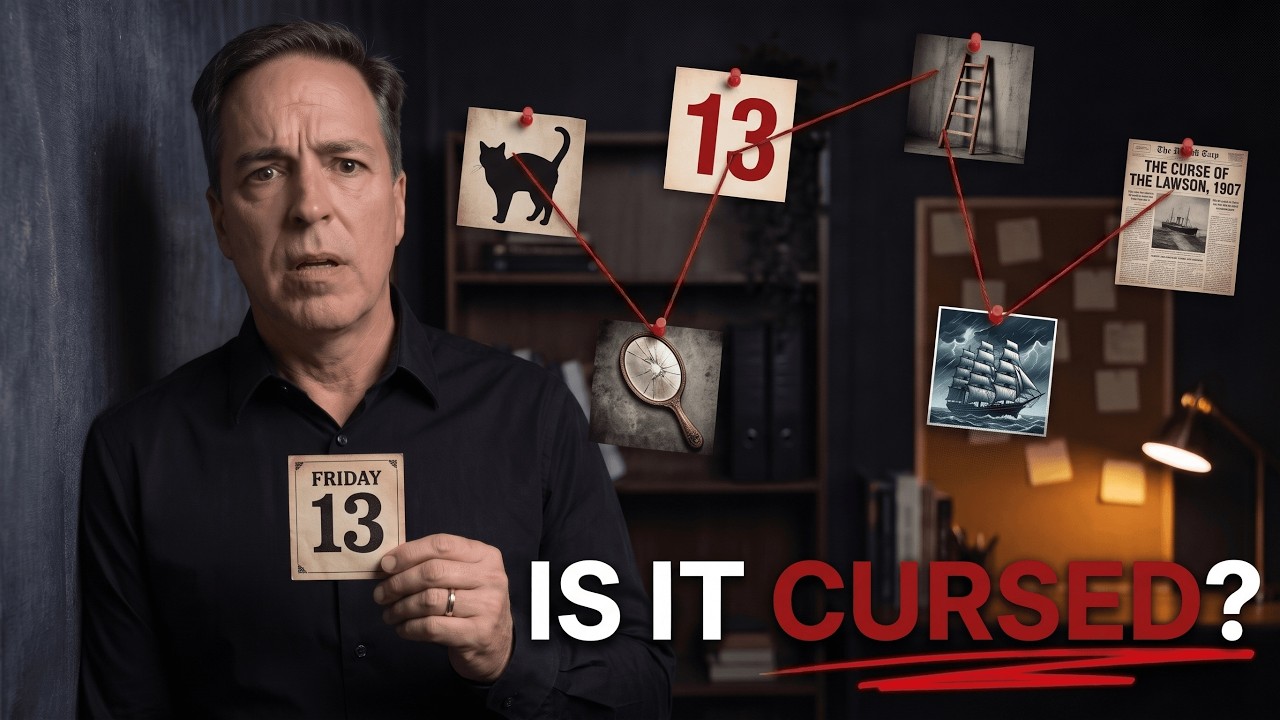
Pete teased it at the top of Episode 128 of Sorta Sophisticated with one word: "Spoiler. It involves pigeons." It's also the reason a Friday the 13th episode ended up being about your brain.
What Is Skinner's Superstition Experiment, Exactly?
Skinner's superstition experiment was a 1948 study in which pigeons received food at fixed intervals no matter what they did, and most of them began repeating whatever they happened to be doing when food arrived, as if that action had caused it.
Skinner published it as "'Superstition' in the Pigeon" in the Journal of Experimental Psychology (volume 38, pages 168-172). The quotation marks around "superstition" are his. He knew he was using a human word as an analogy for bird behavior, and that's worth keeping in mind. "Superstitious behavior" is a technical term in behavioral psychology, but it describes accidental conditioning, not anything a pigeon believes.
Fifteen Seconds, No Matter What
The setup was simple. Skinner kept each pigeon at about 75 percent of its normal body weight so it was reliably hungry. A clock opened the food hopper for five seconds at regular intervals, and Skinner noted that 15 seconds, the interval Pete described, worked very well. The paper says plainly that the food came "with no reference whatsoever to the bird's behavior."
In six of the eight birds, the routines that developed were clear enough that two observers could agree on counting them. Skinner's descriptions read like a nature documentary about a very odd bar. One bird circled counterclockwise. One thrust its head into an upper corner. One developed a "tossing" motion, as if lifting an invisible bar with its head. Two swung their heads and bodies side to side like a pendulum. Another made pecking or brushing motions toward the floor without touching it.
The cause was timing. Whatever the bird happened to be doing when the food arrived got reinforced, so it did more of it. Doing more of it made it more likely to be mid-ritual when the next meal dropped. As Pete put it on the episode, "every once in a while, the food actually showed up again during that weird little routine. So they thought it was working."
Pete called Skinner a Harvard psychologist, and that's how most people remember him. He joined the Harvard faculty in 1948, the year the paper came out. The paper itself lists Indiana University, where he was when he ran the study.
"Or Fortuitous, as One May Say"
Amanda tied it back to the word of the week. The episode opened with fortuitous, which Pete insisted means "by chance," not "lucky," from the Latin fors. When he got to the 15-second timer, Amanda said, "Or fortuitous, as one may say."
That's a good summary of the experiment. The pigeons couldn't tell the difference between fortuitous and earned. Skinner saw the same mistake in people. "Rituals for changing one's luck at cards are good examples," he wrote. He also described "the bowler who has released a ball down the alley but continues to behave as if he were controlling it" by twisting his arm and shoulder. Once the ball has left your hand, the body English doesn't change anything, but you keep doing it.
From Pigeons to Lottery Tickets
Pete followed the pigeons with people. In 1975, psychologist Ellen Langer published a paper called "The Illusion of Control." In one study, office workers bought $1 lottery tickets printed with pictures of football players. Some picked their own ticket. Others were handed one. Just before the drawing, Langer asked them what it would take to sell the ticket back.
People who had been handed a ticket asked for an average of $1.96. People who had chosen theirs asked for $8.67. It was the same lottery with the same odds. Choosing the ticket didn't change their chances, but it made them value the ticket more than four times as much. Langer was studying belief in your own influence rather than accidental reinforcement, but the result is similar: if you were involved, it feels like you had something to do with how it turned out.
The Pigeons Had a Defense
The experiment has a footnote that's fair to the pigeons. In 1971, psychologists John Staddon and V. L. Simmelhag repeated the setup, watched more closely, and published their findings in Psychological Review. Just after food arrived, the birds did a mix of other activities. As the next feeding approached, they settled into what Staddon and Simmelhag called a terminal response, mostly pecking, and kept at it until the food came. They read this as ordinary food-anticipation behavior for a pigeon, not a lucky accident that got reinforced. The experiment's main point survives. Its tidy version, where every ritual is a lucky accident that got reinforced, needed revising.
Why You Knock on Wood Anyway
The pigeons can't think about any of this. People can, and we keep the rituals anyway. Pete found a word for that and admitted on-mic he "had to look that up": acquiescence. The idea comes from University of Chicago psychologist Jane Risen, who described it in a 2016 Psychological Review paper. Your gut produces a superstitious feeling, your rational brain recognizes that it's nonsense, and you go along with the feeling anyway because ignoring it feels like tempting fate.
The episode had a live example. Amanda, who says she isn't superstitious and lets her daughters open umbrellas indoors, heard Pete joke about something bad happening to one of them and immediately said she'd blame him. "Now I'm just going to blame you." "Oh, so you are superstitious," Pete said. She knew it didn't make sense, and she said it anyway.
Pete's conclusion was more generous than Skinner's: "It's just your brain trying to find some control in a world that doesn't give you much. Pigeons do it. Presidents do it. Hall of Famers do it." Skinner's birds spun in circles because the world fed them on a schedule they couldn't see. Most of us don't have a 15-second timer, but we still knock on wood.
---
Skinner's pigeons are the turning point of Episode 128 of Sorta Sophisticated, "13 Men Walked Under a Ladder: Nobody Died (Right Away)." The episode also gets into why Italy dreads Friday the 17th instead, and how a pair of lucky college shorts may have made basketball shorts baggy. If you want more after that, Pete recommends Stuart Vyse's Believing in Magic: The Psychology of Superstition.
Hear the full episode here 👇 13 Men Walked Under a Ladder: Nobody Died (Right Away) (Episode 128)
