
You Only Ever Hear From the Winners: Survivorship Bias Examples That Explain Why Success Looks Like Luck
For every Messi, there are hundreds of absurdly talented people you will never hear a word about. Not scrubs. Not people who didn't want it badly enough. Genuinely great players whose names never made it out of their own region. That gap is where most of our ideas about luck come from, and the survivorship bias examples below are a decent tour of how much it distorts.
Because here's the problem with learning from success stories: the failures don't get interviewed.
History Is Written by the Winners, and the Losers Don't Get a Podcast
Survivorship bias is what happens when you draw conclusions from the things that made it through and quietly ignore everything that didn't, mostly because you can't see it.
The story that made the idea famous comes out of World War II. A statistician named Abraham Wald was asked to help figure out where to add armor to bombers, and the planes coming home were covered in bullet holes across the wings and the fuselage. The obvious answer was to armor the spots with the most damage. Wald's answer was the opposite: armor the places with no holes, because those were the planes that came back. The ones hit in the engines weren't in the sample. They were in the ocean.
That's the whole trap in one image. You're studying the survivors and calling it a study of everyone.
Survivorship Bias Examples: There Are Hundreds of Messis
Every World Cup produces the same conversation. Messi got found by the right person at the right time. Haaland is just huge and athletic and built for this. He was lucky.
Sure, partly. Nobody picks their height, and nobody picks whether a scout happens to be at the game. But the version of the story that survives is the version where it all looks preordained, because the guys who worked exactly as hard and never got seen aren't giving interviews about it. There isn't a documentary about the hundred players who were almost Haaland.
Our rough split, and this is a Pete number, not a research number, is that hard work gets you about 86.1% of the way there and luck kicks in for the rest. Made-up precision aside, the shape feels right. You can't discount the years. You also can't pretend the last stretch is fair.
So Is Talent Luck?
This is where people get uncomfortable, and honestly the answer is no. Talent is mostly work.
Predisposition is real, obviously. Some people are built for basketball in a way that no training schedule can replicate. But being predisposed and being great are separated by about a decade of unglamorous repetition that nobody films. Luck doesn't carry you that distance. It shows up at the margin, once you've already done the part that isn't luck, and opens a door you couldn't have opened yourself.
Which is a more useful way to think about it than either extreme. "It's all luck" lets you off the hook. "It's all hard work" is a lie told by people who got the door opened for them.
The Winners You Stop Hearing From
Then there's the flip side, which almost nobody accounts for: sometimes the survivors stop being survivors and the story just ends there.
Lottery winners are the obvious case. A striking number of big jackpot winners report being less happy years later, and we didn't chase down the exact study, so take that as directional rather than gospel. The pattern is consistent enough to have earned a nickname, though. Money solved exactly one problem and created about a hundred more that nobody warned them about. Everyone they've ever met has an idea. Nobody taught them how to hold that much of it.
You hear about the check being handed over. You don't hear about year four. The follow-up isn't a story anyone wants to publish, so it drops out of the sample the same way Wald's missing bombers did.
What This Actually Costs You
The real damage from survivorship bias isn't that it makes you wrong about Messi. It's that it makes you quit.
If success looks like a lottery ticket, then not buying one is the rational move, and you stay home. If it looks like what it usually is, which is years of work meeting an open door, then the job is to keep working and to stand near as many doors as possible. That's the same argument we keep landing on: put your name in more hats, because you cannot win a drawing you never entered.
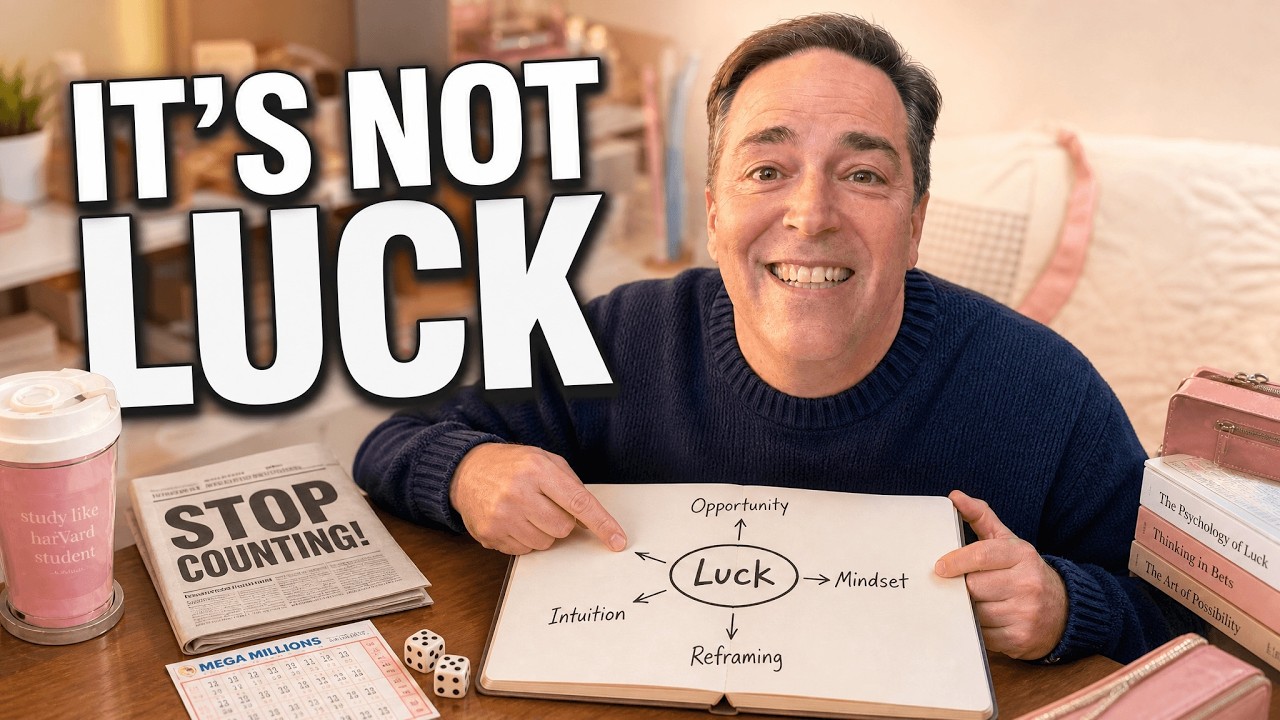
Episode 113 of Sorta Sophisticated gets into the parts that didn't fit here, including the newspaper experiment where self-described unlucky people walked right past $250 in bold print, and the four habits that separate lucky people from everyone else.
Watch the full episode here 👇 Lucky People Aren't Actually Luckier... Here's What They Do Differently (Episode 113)
