
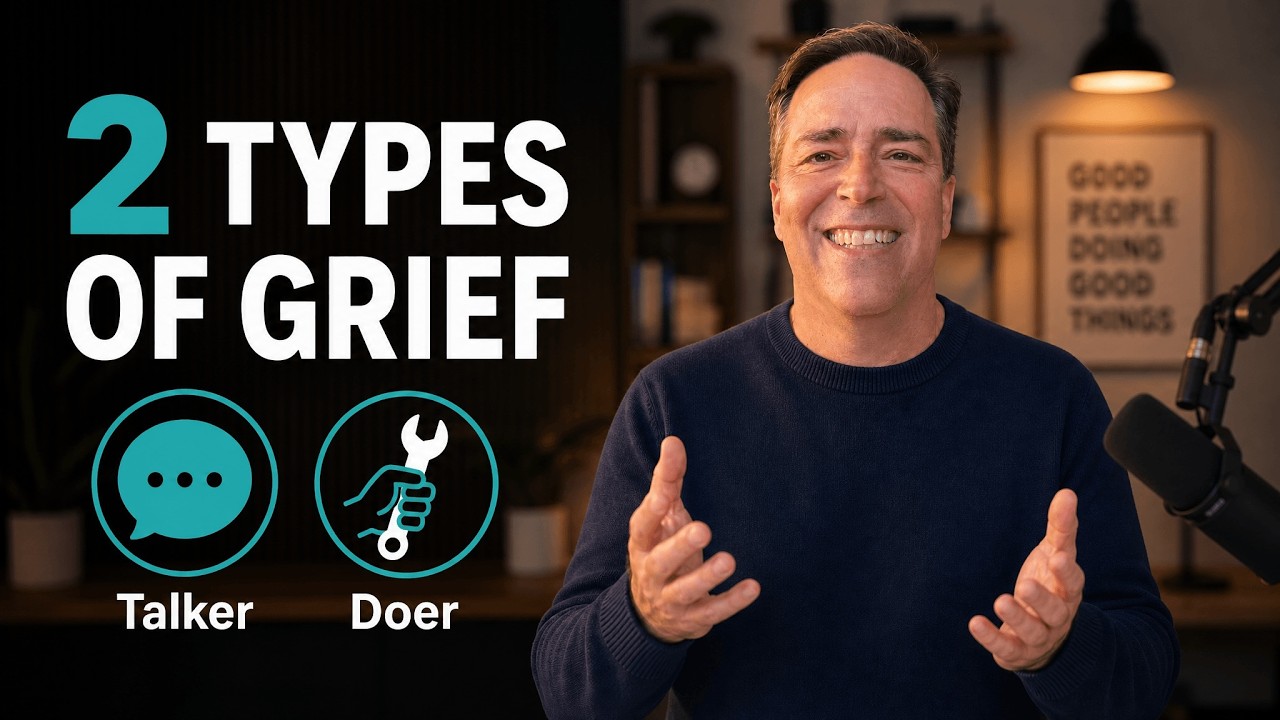
Talkers and Doers: Intuitive vs Instrumental Grievers, and Why It Splits Families Down the Middle
One kid wants to talk about it every night. Another one goes quiet, cleans the garage, and changes the subject when you bring her up. Same house, same loss, and each of them is now privately convinced the other is handling it wrong. That's the intuitive vs instrumental grievers split, and it is doing more quiet damage inside grieving families than almost anything else.
Pete found the research three years into it. His honest reaction was that knowing this on day one would have changed how he talked to his own kids.
Two Ways to Carry the Exact Same Loss
Grief researchers, most notably Terry Martin and Kenneth Doka, sorted grieving into two broad styles rather than stages.
Intuitive grievers process out loud and in real time. Crying, talking, feeling it as it arrives, needing another person in the room. Instrumental grievers process through action. Hands, tasks, motion, problem-solving, doing something rather than saying something. Most people are a blend with one setting cranked louder than the other.
Neither one is the healthy version. That's the whole point of the framework, and it's the part that gets lost fastest.
Intuitive vs Instrumental Grievers, Scored Across One Household
Pete puts himself at about 85.6% talker, which is a suspiciously precise number from a man whose job is sitting behind a microphone talking. The evidence is fairly strong.
His house runs both ways. Ruth is another talker. Luke is a doer who does not particularly want to discuss it, and never has. Paul is also a doer, but a completely different kind, the one who processes by meditating, making music, and hiking. Emma lands on the doer side too. Three doers, two talkers, one loss.
Before he had the language for it, Luke going quiet just read as distance. Some kids talk about it, some kids don't, and you interpret that however your own wiring tells you to. After he had the language for it, the same silence read as Luke doing the exact thing Pete was doing, in a different format. Nobody in that house was grieving wrong. They were grieving in translation.
Why the Two Styles Can't Stand Each Other
The friction is almost automatic, and it isn't really about grief. It's about each style seeing the other one as evidence of a problem.
If you're a talker, the doer in the family looks like they're dodging it. Suppressing. Building a shed instead of feeling something. You start worrying about them, which usually means you start asking questions, which is the exact pressure they're organizing their whole week to avoid.
If you're a doer, the talker looks like they're marinating in it. Circling. Re-opening the same wound out loud every night and calling that progress. So you get quieter, which the talker reads as confirmation that you're shut down, and now you're both managing each other instead of your own loss.
Same house. Same person missing. Two people quietly grading each other's homework.
The Doer Setting Has a Trapdoor
Here's where it gets less tidy, because the two styles aren't fixed and Pete caught this in himself.
He's a talker by default. But when his adult kids clear out of the house and there's nobody left to talk to, he goes straight into doing mode. Tasks. Motion. Staying busy. And he's clear-eyed enough to name why: so he doesn't have to process.
So doing can be genuine processing, the way it clearly is for Paul with the music and the hiking. Or it can be the thing you reach for so processing never has to start. Same behavior, opposite functions, and the only person who can tell the difference is usually the one doing it. Which makes "just leave the doers alone" bad advice, same as "get the doers talking."
It's Love Languages, But for the Worst Year of Your Life
Amanda's read on all this is that it works like the love languages, and that's about right. Not a diagnosis. Just a translation layer that stops you from reading somebody's dialect as an insult.
You still have to do the work of asking. Ask the doer what they'd rather be doing with you instead of talking. Ask the talker whether they want a response or just a witness. What you don't get to do is decide that the way you carry it is the correct way and everyone else is behind schedule. There's no schedule, and there are at least two right answers under the same roof.
Episode 114 of Sorta Sophisticated is Amanda interviewing Pete three years after Gabby died, which is a format we'd never tried. It covers what didn't fit here, including why the five stages were never written for the bereaved, what brain scans show about grief behaving more like withdrawal than sadness, and the graduation days that blindsided him harder than the funeral.
Hear the full episode here 👇 Nobody Knows What to Say After Grief (Here's What Actually Helps) (Episode 114)
