
Lucky People Aren't Actually Luckier — Here's How to Be Luckier Anyway
The luckiest person we know is a woman named Ally. She enters every giveaway, calls into every radio station, drops her name in every drawing, and she wins. Somewhere around fifty times by now. So when we went looking for how to be luckier ourselves, the question was pretty simple: is Ally blessed by the universe, or is she just doing something the rest of us aren't?
There's actual science on this, and it lands hard on the second answer. Lucky people aren't smarter or cosmically favored. They notice more. That's basically the whole trick.
The Newspaper Test That Caught Lucky People in the Act
A psychologist named Richard Wiseman spent years studying ordinary people who thought of themselves as lucky against ordinary people who thought of themselves as unlucky. Not gamblers, not high rollers. Regular folks he recruited off the street. First he interviewed all of them about their lives, their jobs, who they married, whether they tended to stumble into good fortune, and sorted them into two groups based on how they saw themselves.
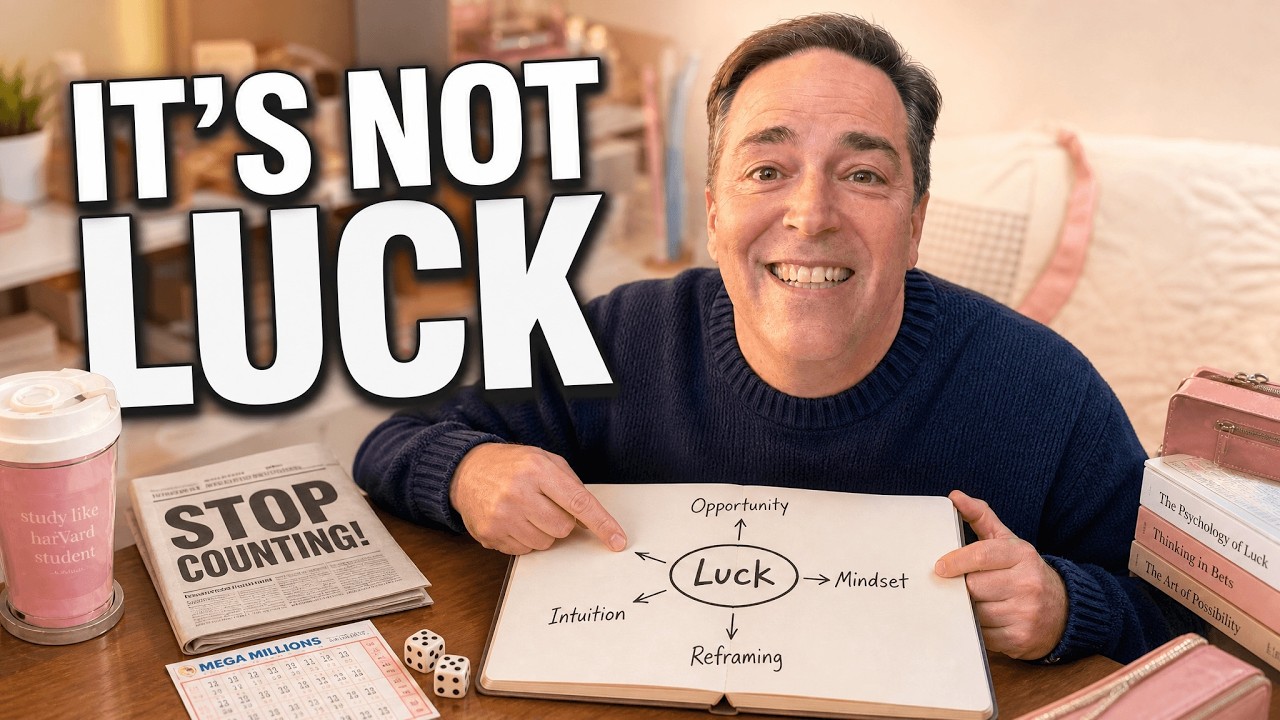
Then came the experiment. He handed each person a newspaper and asked them to count the photographs inside. Easy enough. But on the second page, in bold letters taking up half the page, sat a message: "Stop counting. There are 43 photos." Halfway through was a second one: "Stop counting, tell the experimenter you've seen this, and win $250."
The people who called themselves lucky spotted the messages and took the money. The people who called themselves unlucky were so locked in on not screwing up the assignment that they blew past both, the $250 included. Same newspaper, same room, same instructions. The only real difference was how much of it each person was actually looking at.
How to Be Luckier: Four Habits You Can Steal
Wiseman put all of it in a 2003 book called The Luck Factor, and it comes down to four habits anybody can practice.
They create more opportunities. Lucky people talk to strangers, try the new restaurant, drive home a different way, say yes more than they say no. Ally isn't winning because the universe likes her. She's winning because her name is in way more hats than yours.
They trust their gut. Not horoscopes, pattern recognition. Your brain is processing an insane amount of information below the surface, and that gut feeling is usually it connecting dots faster than your conscious mind can explain them. Lucky people listen to that instead of talking themselves out of it.
They expect good things to happen. This one is behavioral, not some power-of-positive-thinking mantra. If you expect to get rejected, you ask fewer people out, take fewer swings, and talk to fewer people at the party. You shrink your own odds on purpose. Expecting a decent outcome tends to put you in the rooms where decent outcomes actually live.
They reframe the bad stuff. Unlucky people wallow. Lucky people treat a setback as the setup for whatever comes next. Same event, opposite story, and the story you tell yourself is what decides whether you get out of bed and try again.
Why Your Brain Is Terrible at This
Here's the humbling part. A lot of what feels like luck is just math your brain flatly refuses to accept.
You think about an old friend, they text you that same day, and it feels like fate. It isn't. You've got a hundred friends who could text you on any given day, and you think about a few of them every day. The odds of that overlapping are maybe a couple hundred to one. Don't quote us on the exact number. But the lottery is 300 million to one, and because you're emotionally invested in the friend thing, your brain files those two events like they're the same. They're not remotely the same.
Flip ten heads in a row and every instinct you have screams that tails is due. It isn't. The coin doesn't remember anything. We evolved reading patterns in nature, where a streak actually meant something, and we're still running that old software in a world of independent coin flips where it just doesn't apply.
Then there's survivorship bias. History gets written by the winners, so the winners are all we hear from. For every Messi, there are hundreds of absurdly talented people grinding away whose names you will never learn. That makes success look like pure luck, when a huge chunk of it was years of unglamorous work that happened to meet an open door.
Luck Loves Exposure
Strip the four habits down and they're really one move: increasing your luck surface area. Luck can't find you if you don't give it a bigger target to aim at. It isn't a mystical force you sit around waiting for, it's what naturally falls out of noticing more, asking more, and showing up more.
Which is kind of freeing, honestly. It means the luckiest people you know don't have better luck than you. They're just better at spotting it, and spotting things is a skill, not a birthright. So drive the new way home, or talk to the person walking their dog, or finally put your name in the hat. The break you're waiting on is probably already in the room. You just have to look up from your phone long enough to notice it.
Episode 113 of Sorta Sophisticated goes deeper into the stuff that didn't fit here, including the birthday paradox (in a room of only 23 people there's a 50% chance two of them share a birthday), the guy who got struck by lightning seven separate times and lived, and why penicillin, microwaves, and Post-it Notes were all accidents.
Watch the full episode here 👇 Lucky People Aren't Actually Luckier... Here's What They Do Differently (Episode 113)
