Why Is Route 66 Called the Mother Road? The Nickname Steinbeck Wrote for Refugees
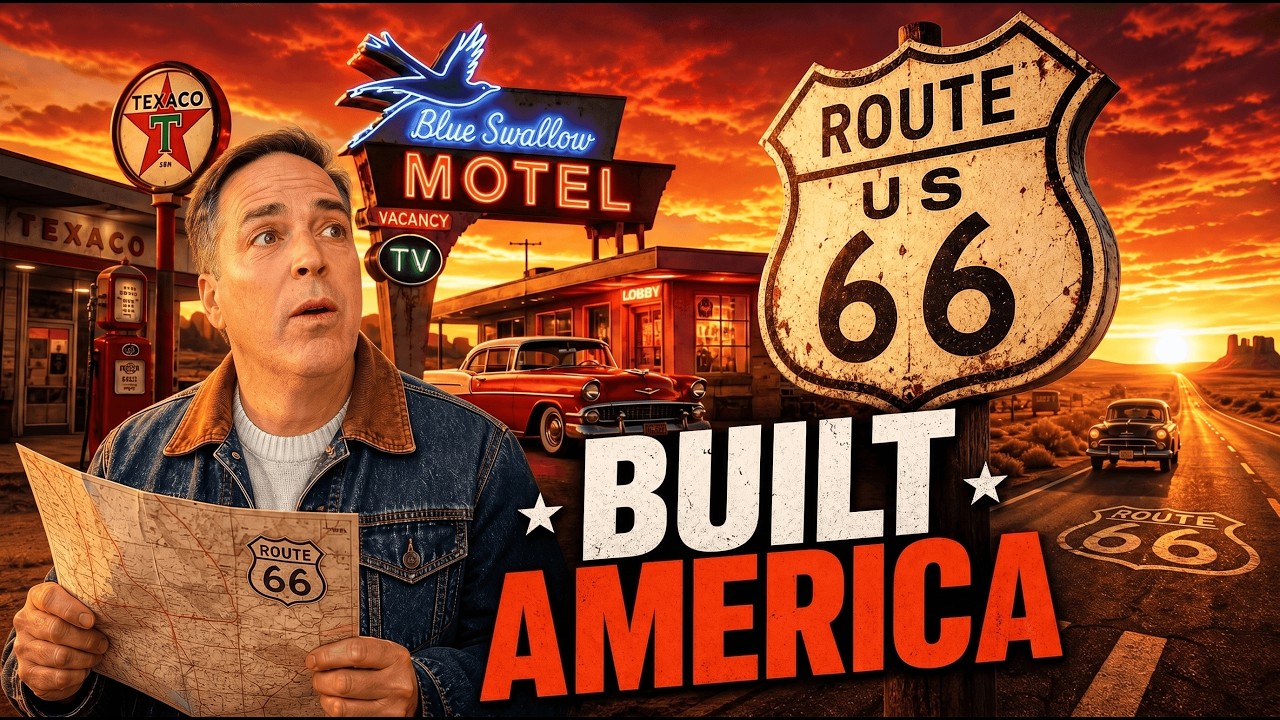
Pete thinks most people who say they've read The Grapes of Wrath are lying. "Everyone says they've read it. I call bullshit." Amanda's reply, "I've read it. I don't remember," mostly makes his point for him. That matters here, because the book is the answer to a question a lot of road-trippers search: why is Route 66 called the Mother Road? John Steinbeck named it. In his 1939 novel he wrote "66 is the mother road, the road of flight," describing the highway that carried broke Depression-era families west to California.
Why Is Route 66 Called the Mother Road, Exactly?
The Mother Road is a nickname for U.S. Route 66, coined by John Steinbeck in The Grapes of Wrath (1939) for the highway Depression-era migrant families took west toward California.
Route 66 had been an official U.S. highway since 1926, running about 2,400 miles from Chicago to Santa Monica. It already had another nickname by then. But "the Mother Road" is the one printed on souvenir shirts and motel signs between Illinois and California, and Pete is right that it still sticks today.
The Road of Flight
The line comes from Chapter 12, one of the short chapters Steinbeck sets between the chapters about the Joad family to describe the migration as a whole. It doesn't describe a vacation route:
"66 is the path of a people in flight, refugees from dust and shrinking land, from the thunder of tractors and shrinking ownership..."
A few lines later he describes families coming "into 66 from the tributary side roads, from the wagon tracks and the rutted country roads," and then: "66 is the mother road, the road of flight."
The "tributary" image explains the name. Steinbeck pictures 66 as a river's main channel, with every dirt road in Oklahoma and Arkansas draining into it. It's the mother in the sense of "mother lode" or "mother ship," the main one that everything smaller feeds into. And it's a mother in the other sense too, the place people go when home doesn't work anymore.
Most "Dust Bowl Refugees" Never Saw a Dust Storm
Pete covers the Dust Bowl in detail on the episode. He explains that years of plowing up the deep-rooted prairie grass left nothing to hold the soil once the drought hit, so the yearly winds turned into black clouds. The Joads are the face of that exodus, and the Mother Road is how they got out.
The historical record adds one twist. Historian James Gregory, who wrote the standard study of the "Okie" migration, estimates that 300,000 to 400,000 people from Oklahoma, Texas, Arkansas, and Missouri moved to California and stayed during the 1930s. Few of them came from the actual Dust Bowl, though. Those counties were sparsely populated, and most migrants came from the eastern parts of those states, where people knew drought and the Depression but not much dust. Reporters called all of them "Dust Bowl refugees," and Steinbeck's novel fixed that picture in everyone's mind.
The road they drove wasn't much of a road yet either. When Route 66 was designated in 1926, only about 800 of its miles were paved, and it wasn't paved end to end until 1938. A lot of the families heading west in the early '30s drove long stretches of dirt and gravel. Pete's reaction on the episode: "Kill me now."
Main Street vs. Mother Road
The competing nickname is worth knowing. Cyrus Avery, the Tulsa businessman who lobbied the road into existence and ran his own filling station and tourist camp on it outside Tulsa, promoted Route 66 as "The Main Street of America." That's a businessman's name for it: a long commercial strip with something to buy every few miles.
Steinbeck's name came from the people who didn't have the money to stop and buy anything. In everyday use, the sad name won. Pete compares it to the Silk Road on the episode, "you got the Silk Road, you got the Mother Road," and both names come from what the road carried, not from who built it.
Why the Sad Nickname Stuck
Pete's summary of The Grapes of Wrath is "There's no good ending." So it's odd that a heartbreaking novel gave a cheerful tourist road its warmest name. Part of the answer is timing. The book came out in 1939, right before the road filled up with soldiers headed to bases in the 1940s and vacationing families in the 1950s, and the name rode along with all of them.
Amanda summed it up in her wrap-up. The road came to stand for "the idea that if your life isn't working, you can drive west and start over." Steinbeck got there first. A mother road is the one you take when home stops working, and Americans have kept driving it long after they stopped needing to.
Episode 109 of Sorta Sophisticated, "The Highway That Built Road Trip Culture," follows Route 66 from a line on a 1926 map to the backbone of American identity. It also covers the ten Cadillacs buried nose-first in a Texas field that ended up in the mountains of Pixar's Cars, and Pete's story about towns along the route that moved their buildings closer to the highway so travelers wouldn't miss them.
Hear the full episode here 👇 The Highway That Built Road Trip Culture (Episode 109)
