
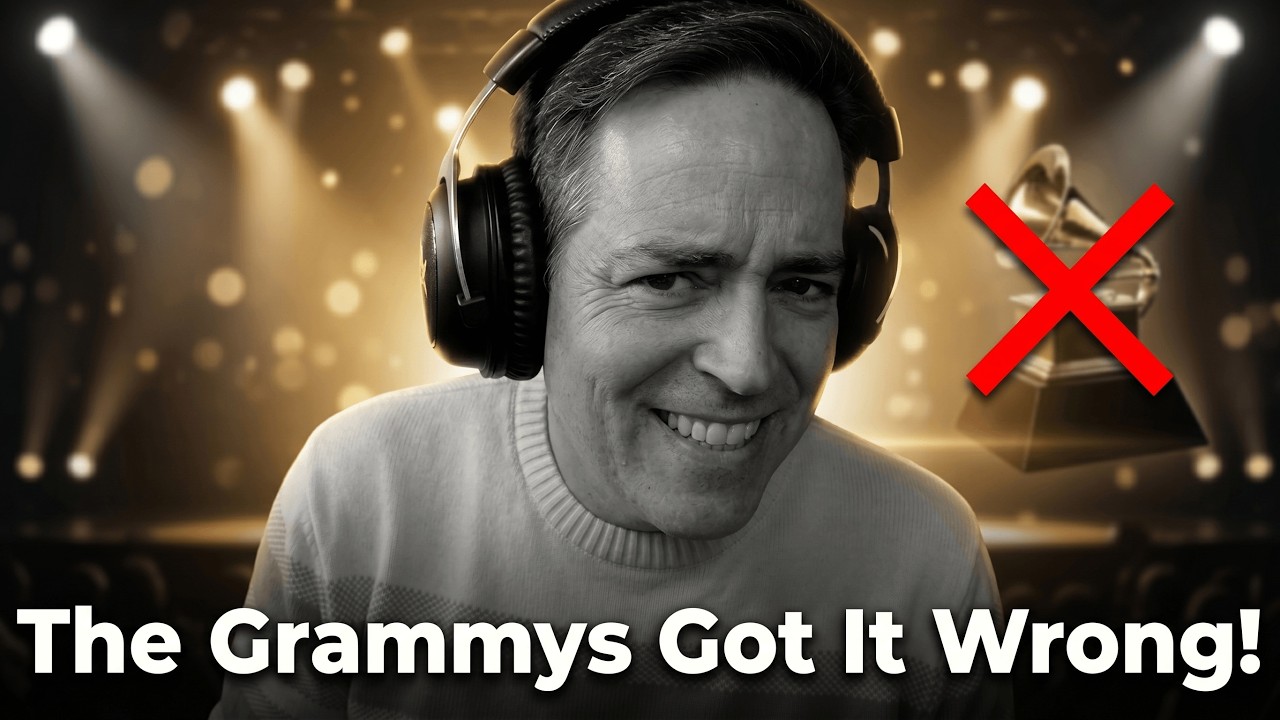
Who Picks the Winners? A Sorta Sophisticated Guide to the Grammys
From the Sorta Sophisticated podcast — where culture, curiosity and chaos collide. This post is adapted from our episode on the Grammys.
Every year the Grammys roll around, somebody you love gets snubbed, and the internet loses its mind. But here’s the thing almost nobody tells you: the Grammys were never built to crown what’s popular. They were built to legitimize what the industry wants to remember. Once you understand that, the whole show makes a lot more sense.
The Grammys started as a backlash
The first Grammy Awards were handed out in 1959 — surprisingly recent for an institution that feels ancient. And they weren’t created to celebrate the exciting new sound of the moment. They were created partly to push against it.
This was the era when rock and roll was taking over — Elvis, Buddy Holly, Bill Haley & His Comets. Teenagers were losing their minds and the establishment was convinced the youth were being corrupted. So the recording industry got together and built an awards ceremony to honor traditional craft and bring some “order” back to music. The Recording Academy was the institution that came out of it, and the original mission was simple: treat recorded music as a serious art form worth preserving.
The award literally faces backward
Here’s a detail we couldn’t stop thinking about: the little gramophone trophy is designed looking back — a nod to history rather than the future. Whether or not that was the intent, it’s the perfect metaphor for the entire institution. The Grammys are structurally backward-looking, and that explains almost everything about how they behave.
Why the awards always lag behind culture
If the Grammys reward what’s safe and established, then every new genre has to wait its turn. Rock and roll didn’t get its own category until 1979 — twenty years after the awards began. Hip-hop wasn’t recognized with a category until 1989. The pattern repeats with every movement that actually changes music.
You can see it in individual careers, too. Kendrick Lamar spent years releasing acclaimed work before the Academy caught up — and he’d go on to win a Pulitzer Prize, so it wasn’t a quality problem. The rapper Nas waited decades before finally winning. The institution moves slowly on purpose, because consensus and caution are the whole point. Disruption in real time is not what it rewards.
What a Grammy actually does for an artist
So why do artists chase it? Because a win can change the entire trajectory of a career. Think about Adele — after her big Grammy moment, she went from doing well to global, generational fame practically overnight. A win brings credibility, money, and mainstream reach.
But there’s a catch. Winning pulls you into what we call the “Grammy box.” The machine starts to reward you for repeating what worked, your audience shifts from die-hard fans to critics and the mainstream, and your art can get a little more vanilla so it reaches everyone. That tension — staying true to your vision versus reaching the masses — is the oldest dilemma in music. It’s basically where the word “sellout” comes from.
Not all fame is the same
One idea worth holding onto: there are different kinds of fame. There’s internet or one-hit-wonder fame. There’s “Grammy fame” — the Taylor Swift, J.Lo tier that fits neatly inside the industry machine. And then there’s iconic, boundary-breaking fame: Prince, Bob Dylan, The Beatles. The artists in that last group weren’t chasing trophies at all. They were changing music, and the Academy often didn’t know what to do with them until much later.
Sometimes the performance matters more than the trophy
We’re emotional creatures who connect through storytelling, and a great live performance can outlast any award. Think Silk Sonic (Bruno Mars and Anderson .Paak) showing up in full '70s glory in 2022, or Prince and a then-emerging Beyoncé sharing the stage in the early 2000s — moments that introduced artists to whole new audiences. The flip side is real too: Milli Vanilli’s lip-syncing scandal shows a performance can sink you just as fast as it can launch you.
And nobody embodied the anti-establishment streak like Prince. He won seven Grammys but treated the whole circus with open indifference — famously giving one of the shortest acceptance speeches ever: two words, “Albums matter,” and he walked off.
The trivia that tells the real story
Beyoncé is the most-awarded artist in Grammy history. For years she held that record while never winning Album of the Year — a glaring snub that became its own storyline — until she finally broke the streak in 2025 with Cowboy Carter, bringing her total to 35.
Before Beyoncé, the all-time record belonged to conductor Sir Georg Solti of the Chicago Symphony Orchestra — a reminder of how much the early awards favored classical and technical categories.
There are roughly 90 categories, which is why the show runs for hours. Many reward craft you never think about: best album notes, best recording package, best engineered album, best historical album.
Around 13,000 voting members make the calls, generally within their own areas of expertise.
Sinéad O’Connor is famously remembered as an artist who rejected the institution entirely — refusing her Grammy in protest.
Queen never won a competitive Grammy during their original run — not for “Bohemian Rhapsody,” not for anything — until a lifetime achievement nod in 2018. Bob Marley, Jimi Hendrix, The Who, and Kiss never won competitively either. The anti-conformists rarely fit the mold.
The real twist: it’s about us
Here’s the uncomfortable part. When your favorite artist gets snubbed and you get furious, what you’re really chasing is validation — proof that the thing you love, the world loves too. The Grammys are a mirror for our own need for external approval. You can’t really be mad at the Academy for that. The people who don’t need the validation just put on the music and enjoy it.
Five things to remember so you sound sorta sophisticated
The Grammys were founded in 1959 and were never meant to crown what’s popular — they exist to legitimize what the industry thinks is worth preserving.
Awards lag behind culture because institutions reward safety and consensus, not disruption in real time.
A win can change a career — but a single live performance can matter even more than the trophy.
Not all fame is the same. Internet fame, Grammy fame, and iconic fame are different lanes, and artists have to pick which one to stay true to.
The Grammys don’t tell us which music is best. They tell us what the industry wants to remember — which means watching them is less about agreeing with the winners and more about understanding the moment.
If this made you rethink a win, a snub, or a performance you still remember years later, tell us which Grammy moment lives rent-free in your head. Stay curious, stay opinionated — and remember, awards don’t define greatness. They just tell you what a moment was trying to remember.
Watch here:
