What Was Marilyn Monroe Productions? The Company That Beat Fox Before It Made a Single Movie
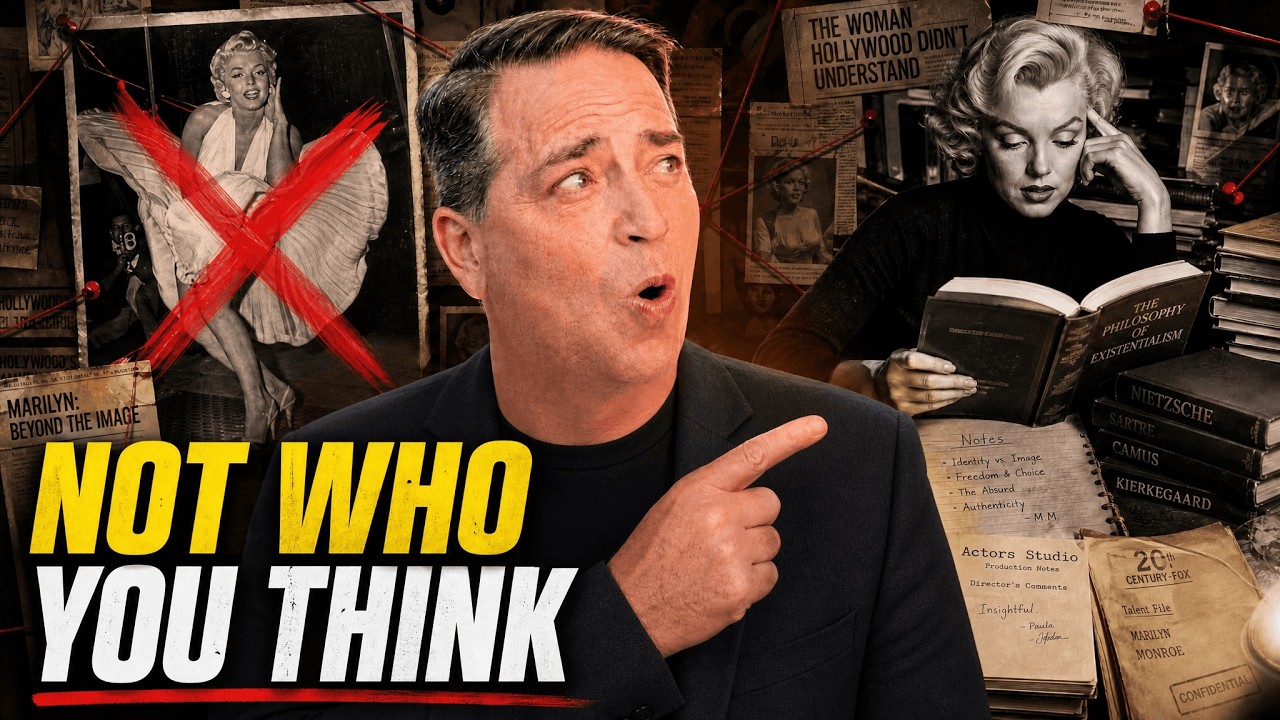
For Gentlemen Prefer Blondes in 1953, Jane Russell was paid $200,000. The blonde in the title got a reported $18,000. Two years later, that blonde owned a film company. So what was Marilyn Monroe Productions? It was the independent production company Monroe founded with photographer Milton H. Greene around New Year's 1955. It was set up so she could pick her own roles and stop working on 20th Century Fox's terms. In Episode 106 of Sorta Sophisticated, recorded for her 100th birthday, Pete called it the first of her four "genuinely radical" moves.
What Was Marilyn Monroe Productions, Exactly?
Marilyn Monroe Productions was an independent film company founded by Marilyn Monroe and photographer Milton H. Greene in New York in 1955, created to give Monroe control over her roles and pay outside her 20th Century Fox contract. It produced one film, The Prince and the Showgirl (1957).
Monroe was president and majority owner. Greene, a fashion photographer who had become a close friend, handled strategy and money. Pete's joke on why it wasn't called Milton Greene Productions holds up: "Nobody knows who the hell he was." Her name was the company's only real asset.
$1,500 a Week and a Pair of Pink Tights
Amanda opened the episode with the pay gap. She'd recently caught something about it, and Pete said it was the starting point for everything that followed. Her seven-year Fox contract started at $500 a week and was up to $1,500 by 1953. Pete's "1,500 bucks" figure is right, and it was a weekly salary. Fox was paying its biggest draw a weekly salary while Jane Russell, on loan from Howard Hughes, was paid by the picture.
The roles were also a problem. After Gentlemen Prefer Blondes and How to Marry a Millionaire, Fox gave her The Girl in Pink Tights, another musical about another showgirl. In December 1953 she didn't show up for the first day of work, and on January 4, 1954, studio chief Darryl Zanuck suspended her. She came back and made The Seven Year Itch with Billy Wilder that fall, the film with the subway-grate dress. Then she left Hollywood for New York with Greene.
"Height of her career," Pete said. "Literally just left them high and dry."
Leverage You Don't Have to Shoot
Pete's core argument is that Monroe had no leverage, so she made some. The timeline shows how literally that worked.
Monroe's lawyer argued that her Fox contract was unenforceable because the studio hadn't renewed it at the right time. Fox denied it, but never took the question to court. Meanwhile she was in New York studying with Lee Strasberg, the artistic director of the Actors Studio, while the press made fun of her for wanting to be a serious actress. In June 1955, The Seven Year Itch opened and was a hit. Fox now had a hit film and a star who wasn't under its control.
On December 31, 1955, Fox gave in. The new deal paid $100,000 per film, required only four films for Fox over seven years, let her work for other studios, and gave her approval of her directors, plus more say over scripts and cinematographers. The terms she got matched the problems she'd walked out over. Her first film under the new contract was Bus Stop (1956), directed by Joshua Logan, and critics noticed. One review said it "effectively dispels once and for all the notion that she is merely a glamour personality."
In the episode, the order of events gets compressed: the company makes its movie, and then Fox comes back. In fact Fox gave in before the company had shot anything. That doesn't weaken Pete's point. The company already worked as leverage before it made a film.
One Movie, Then a Breakup
Marilyn Monroe Productions did eventually make its film. The Prince and the Showgirl was shot in England in the summer and fall of 1956. Laurence Olivier directed it and co-starred as a stiff Balkan regent opposite Monroe's American chorus girl. It came out in 1957 to a lukewarm box office, and it was the only movie the company ever produced, just as Pete said.
The partnership broke up during filming. Monroe had married Arthur Miller in June 1956, and on the set in England, Miller and Greene didn't get along. At a stockholders' meeting in April 1957, Monroe accused Greene of mismanaging the company, and that spring he sold his stake. The company continued on paper for a while but never made another film.
Pete's version is that she shut it down "because she doesn't need it anymore." The real breakup was messier than that. His larger point still holds: the company had already gotten her what she founded it for.
The Business Plan Under the Platinum
The episode's title calls her the most seen, least known woman in history, and this company shows why. It was a 29-year-old woman on a studio salary negotiating against Fox in 1955, and winning. Most people know the dress over the subway grate and very little about the contract she signed afterward.
Pete's whole theory of Monroe is that the dumb-blonde persona was a costume she chose to wear, and that she knew what it was worth. "She was milking the system that thought it was milking her," he said. Whether or not you buy that for every blown take on a film set, the paperwork backs him up here. On paper, the person running the negotiation looks a lot more like a CEO than a pin-up.
Episode 106 covers more than the business side. There's the quiet way she helped Ella Fitzgerald get bookings, and the truth about those 1949 nude photos and the $50 she was paid for them.
Hear the full episode here 👇 Marilyn Monroe: The Most Seen, Least Known Woman in History (Episode 106)
