What Is the "Merchant of Death" Obituary? The Nobel Prize Origin Story Nobody Can Find
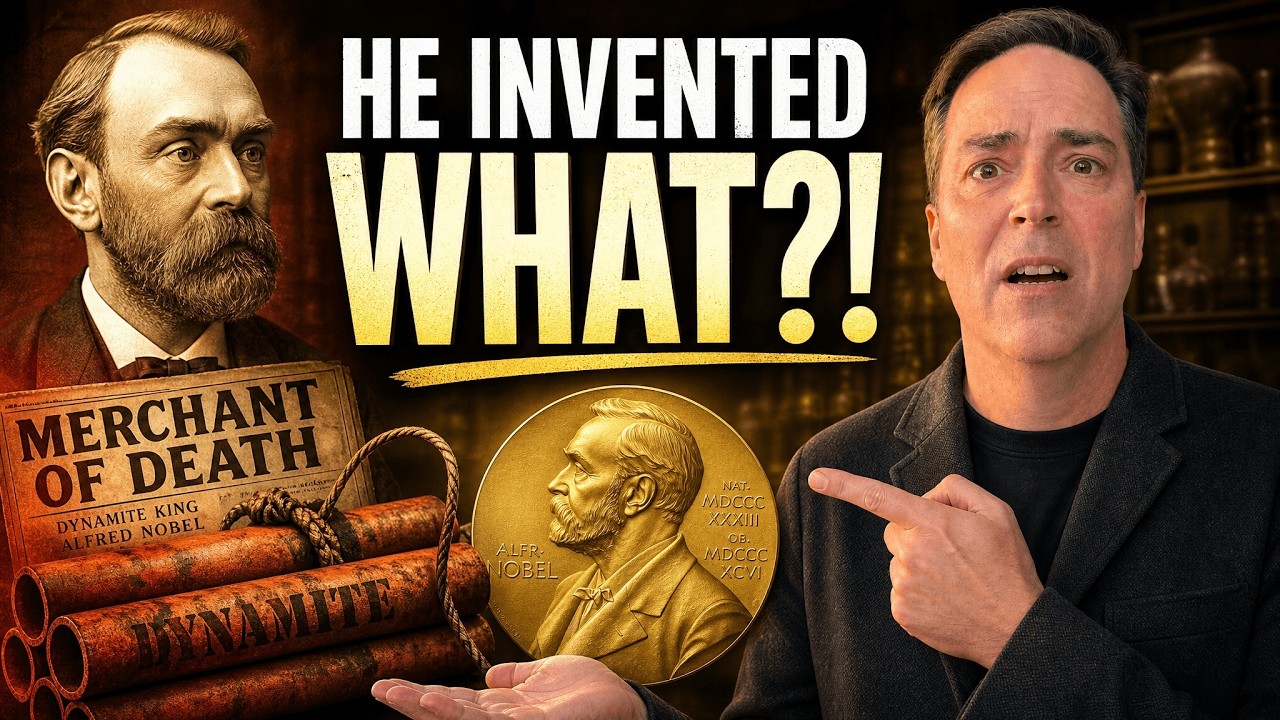
What is the merchant of death obituary? It's the story that a French newspaper mistakenly ran Alfred Nobel's obituary in 1888 under the headline "The merchant of death is dead," and that reading his own reputation in print is what pushed him to leave his fortune to a set of prizes. It's the origin story of the Nobel Prize. It's in a thousand commencement speeches. And while researching Episode 116 of Sorta Sophisticated, Pete got to the end of that story on-mic and said the part most people skip: it's probably not the whole thing. He was right, and the reason why is better than the myth.
What Is the Merchant of Death Obituary, Exactly?
The merchant of death obituary is a premature obituary of Alfred Nobel, printed by mistake in April 1888 after a French newspaper confused him with his brother Ludvig — and, in the popular telling, condemned him so brutally that he rewrote his will and invented the Nobel Prizes.
The mix-up is real and documented. The headline everyone quotes is the part no one has produced.
They Buried the Wrong Brother
Ludvig Nobel died in Cannes on April 12, 1888. He was Alfred's older brother and a serious figure in his own right, running the family's oil empire out of Baku. Alfred was alive and living in Paris.
Several Paris papers got it backwards and reported that the dynamite man had died. Le Figaro ran its version on April 15 and printed a correction the following day.
The surviving text reads: "A man who can not very easily pass for a benefactor of humanity died yesterday in Cannes. It is Mr. Nobel, inventor of dynamite."
That's a jab. It is not a guillotine. And Nobel almost certainly saw the coverage — his friend Juliette Adam wrote to him that spring, relieved the reports were false. So the incident happened, and he knew about it. What's missing is any evidence it wrecked him.
The Phrase Belongs to a Later Century
"Le marchand de la mort est mort." The merchant of death is dead. It's a perfect headline, which is the first clue.
Nobody has ever produced that clipping. And the epithet itself is a period piece from a different period: "merchants of death" entered wide circulation in the 1930s as an attack on the arms industry, driven by the 1934 bestseller Merchants of Death by H.C. Engelbrecht and F.C. Hanighen and by Senator Gerald Nye's Senate hearings into the munitions trade. That's roughly four decades after the funeral of the wrong Nobel brother, and nearly four after Alfred's own.
Researchers who have chased the citation backward land on Nicholas Halasz, whose 1959 biography of Nobel appears to be the first place the "merchant of death" headline gets attached to the 1888 mix-up, with no source given for it. Before Halasz, the phrase isn't following Nobel around. After Halasz, it's everywhere.
Ingrid Carlberg, who wrote the major modern biography of Nobel and went through his papers, has made the same point from the other direction: the episode doesn't appear in his correspondence. Nobel wrote constantly, in five languages, about everything. He never mentions the morning that supposedly changed his life.
The case for the story is one sentence long, and in fairness it's a good one.
Le Figaro said Nobel could not "very easily pass for a benefactor of humanity." Seven years later, Nobel sat down and wrote a will directing that his fortune go to those who "have conferred the greatest benefit to humankind."
That is a strange coincidence for a man who read his own bad press. Historians who defend the story point straight at it, and it's the strongest thing they have. What they don't have is a document connecting the two.
The Woman With the Better Claim
The version that doesn't fit on a motivational poster starts in 1876, when Nobel hired an Austrian aristocrat named Bertha Kinsky as his secretary in Paris. She lasted about eight days before eloping with Arthur von Suttner and leaving for Georgia. Then the two of them wrote to each other for the next twenty years.
Bertha von Suttner became the most visible pacifist in Europe. Her 1889 novel Die Waffen nieder! — Lay Down Your Arms — hit hard enough that Tolstoy wrote to her in October 1891 hoping it would end war the way Uncle Tom's Cabin had helped end slavery. She spent the rest of her life leaning on her wealthy explosives-manufacturing friend to fund the cause, and scholars generally credit her influence with putting a peace prize in the will at all.
Look at the five categories Nobel actually named: physics, chemistry, medicine, literature, peace. Four of them are his own résumé — the chemist, the engineer, the man who read constantly and wrote poetry in English. Peace is the outlier. Peace is the friend.
She won the prize herself in 1905, the first woman to.
What He Actually Signed
Nobel signed the final will in Paris on November 27, 1895. It's short enough to read on a phone, and it hands over about 94% of his assets, 31,225,000 Swedish kronor, to a fund that would pay out annually, forever.
By then he had patented dynamite in 1867, built roughly 90 factories in more than 20 countries, and accumulated 355 patents, including one for an early firearms silencer. He died in San Remo on December 10, 1896, of a stroke, with no wife and no children. The first prizes were awarded in 1901.
None of that changes based on whether a French copy editor was cruel or merely dismissive.
Why This Myth Refuses to Die
The merchant of death story survives because it's a redemption arc with a mechanism. One bad morning, one newspaper, one rewritten document. It suggests a person can see themselves clearly by accident and fix it in a day.
The likelier story is slower and less quotable: twenty years of letters from someone who kept telling him what his product did, and a man who took a long time to agree with her. That version asks more of you. It doesn't offer a single terrible morning to point at.
Amanda's verdict on the whole business, using the episode's word of the week, was that Nobel's life is corybantic — wild, frenzied, out of control. She's right, and the obituary myth is the tidiest thing anyone has ever pinned on him.
Which is fitting for a prize that exists so humanity can announce once a year what it thinks is worth rewarding. Given the chance to decide what Alfred Nobel's turning point was, we picked the material we prefer: one dramatic morning that nobody has to check.
Episode 116 of Sorta Sophisticated is the whole strange machine behind the prizes, with Amanda asking the questions Pete didn't prepare for. Also in there: why Gandhi never won and the British lord who beat him, and why the most famous medal on earth isn't solid gold.
Hear the full episode here 👇 The Strange Story Behind The Nobel Prize (Episode 116)
