What Is Nostos? The Greek Word for Going Home That Explains Why the Odyssey Outlived the Iliad
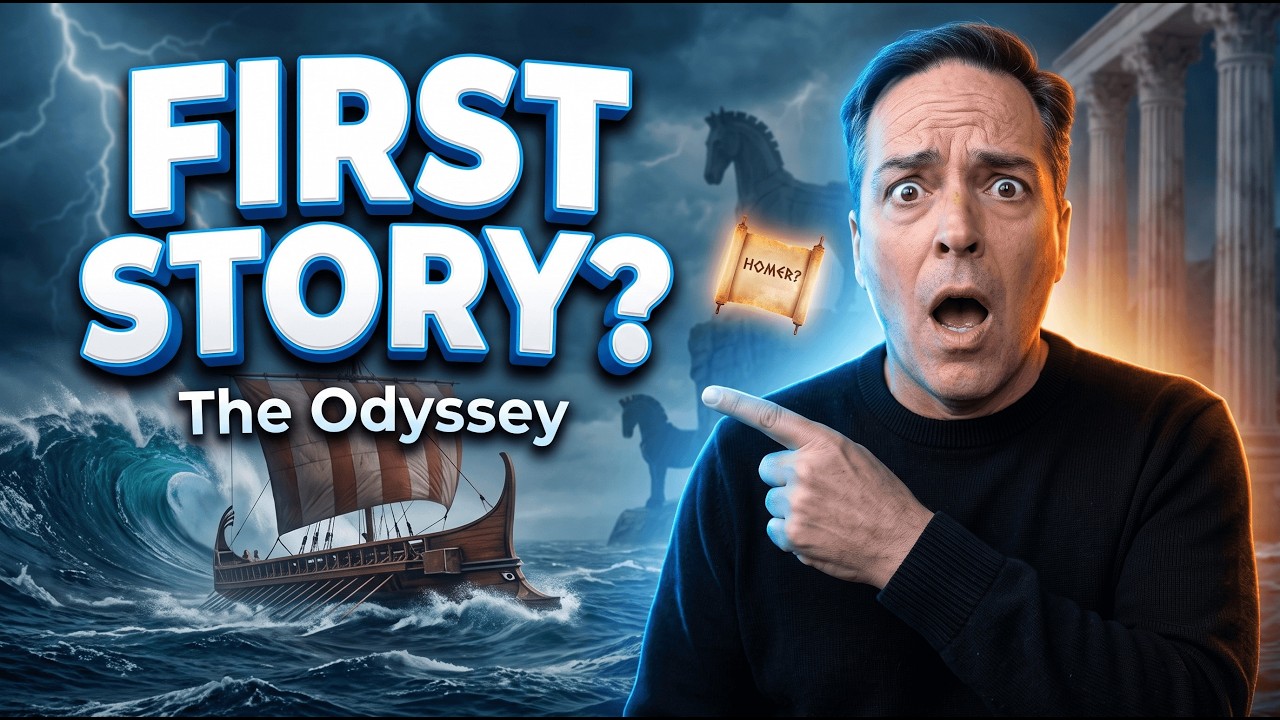
A goddess offers Odysseus immortality. Stay on the island, never age, never die — and he turns it down to sail back to a rocky little kingdom and a wife who, as Calypso points out to his face in Book 5, cannot compete with a goddess on looks and never will. That refusal has a name. So what is nostos? It's the ancient Greek word for the homecoming, the return journey from war to your own house, and it's the engine the entire Odyssey runs on. Pete spends most of Episode 111 of Sorta Sophisticated circling it without the vocabulary: "This is a story about home."
What Is Nostos, Exactly?
Nostos (Greek: νόστος, plural nostoi) is the ancient Greek term for a hero's homecoming — the return from war or wandering to his own land and household — and it functions in Homer as a goal that can be won, lost, or destroyed, the same way a battle can.
One honest note before the rest: this is a classicist's technical term rather than a named theory with a founder attached. It's a Greek noun that scholars kept using because Homer keeps using it.
It Shows Up in Line Five
The Odyssey announces its subject immediately. Five lines into the poem, before any monster or god, Odysseus is described as struggling "for his own life and the nostos of his companions."
Two goals, stated up front. He achieves one. Every single member of his crew dies before Ithaca — eaten, drowned, blasted out of the water for slaughtering the wrong cattle — and he walks onto his own beach alone, asleep, dropped there by strangers. The poem tells you what it's about in the fifth line and then spends 12,000 more failing at half of it.
Achilles Had to Choose. That's the Whole Argument.
Pete draws the contrast on-mic and it's the correct one. "The Iliad is all about war and pain and sacrifice and man things and dying in battle and blood and gore. But the Odyssey — it's the opposite of all of that."
The two poems differ in more than mood. They're built on opposite choices, and the Iliad says so out loud. In Book 9, Achilles tells the embassy that his mother laid out two fates for him. Stay at Troy, and his nostos is gone but his kleos, his name in other people's mouths, is imperishable. Go home, and the glory dies but he gets a long life.
Kleos or nostos. Fame or your house. Achilles takes the fame, and the Iliad is what that costs.
Odysseus takes the other one. He turns down a goddess and eternal life to get back to a mortal woman on an island of goats. Ten years of war, ten years of getting home, and the prize at the end is his own bed — which he built himself, out of a living olive tree, and which is the password Penelope eventually uses to test him.
The Ghost Who Changed His Mind
Then Homer does something almost unfair to his own earlier poem.
In Book 11 Odysseus goes down to the underworld and meets Achilles, who by every rule of the Iliad won. He got the imperishable glory. He is, as Odysseus points out, a king among the dead.
Achilles tells him he'd rather be a hired hand working another man's field, landless and half-starved, than rule over all the dead. The greatest warrior in Greek literature, given the chance to grade his own decision from the far side of it, says he picked wrong.
That's the sequel litigating the prequel. Nostos wins the argument, in writing, 2,700 years ago.
There Was a Whole Lost Poem Called The Returns
Odysseus wasn't the only one trying to get home, and the Greeks wrote it all down. An epic called the Nostoi — literally "The Returns," five books, attributed to Agias of Troezen — covered the homecomings of the other Greek commanders after Troy.
Almost none of it survives. About five and a half lines of actual text, plus a plot summary written by a man named Proclus centuries later. From that summary we know Nestor and Diomedes got home clean, Menelaus got blown to Egypt, and Agamemnon walked into his own palace and was murdered there by his wife and her lover.
So the Greeks had a whole genre of homecoming stories, and most of the homecomings were disasters. Agamemnon's is the one the Odyssey keeps bringing up — his ghost warns Odysseus about it directly in Book 11. The version that survived intact is the one where the homecoming works, and it survived because people kept choosing to perform it.
Nostos Plus Pain Equals a Word You Already Use
In 1688, a Swiss medical student named Johannes Hofer submitted a dissertation at Basel about soldiers who fell apart when posted far from home. Swiss mercenaries, mostly, serving in foreign armies and going to pieces over it — obsessive thoughts of home, weeping, no appetite, no sleep, racing heart.
He needed a clinical-sounding name, so he took nostos and bolted algos, pain, onto it. Nostalgia. He classified it as a brain disease. The recommended treatments included narcotics, bloodletting and purging, and if none of that worked, sending the patient home.
The word has softened into something you feel about a TV show from your childhood. It started as a diagnosis for the specific agony Homer wrote 24 books about.
The Homecoming Is Not the End
One detail keeps the ending from being a clean one, and most retellings skip it.
In the underworld, the prophet Tiresias tells Odysseus what happens after the suitors are dead. He has to leave again. Take a well-made oar, walk inland, keep going until he reaches people so far from the sea that they eat their food without salt and don't know what a ship is — and keep walking until a stranger looks at the thing on his shoulder and asks why he's carrying a winnowing fan. Plant the oar there. Make the sacrifice. Then go home for good, and die gently, in old age, out of the sea.
The poem's reward for twenty years of trying to get home is a house, and then one more trip.
Pete lands somewhere close to this at the end of the episode, working it out live. "He's physically trying to get home. But that's all we really want. What is home to us? Home is heaven. Home is your husband, home is your family." Then, on Odysseus lasting ten years at it: "He wasn't the strongest dude. He was just human. He knew what he wanted to get home to. He had his why."
That's nostos with the Greek taken off. It describes a reason to keep moving toward a place more than it describes the place. Achilles picked the version where you get remembered; Odysseus picked the version where somebody is waiting. The Greeks then spent six hundred years reciting the poem about the second one, while the epic covering everybody else's homecoming crumbled down to five and a half lines.
Episode 111 of Sorta Sophisticated is the full crash course on the Odyssey for people who never read it. Also in there: Pete's two-part cheat code for faking your way through all 24 books, and the thirty-line scene about an old dog that he says still makes everybody cry.
Hear the full episode here 👇 The Story That Invented All Stories (Episode 111)
