4 Things Invented by Accident: Mold, a Melted Candy Bar, Glue That Failed & a Cookie That Maybe Wasn't an Accident At All
Penicillin, microwaves, Post-it Notes, chocolate chip cookies. Every one of those things invented by accident, by somebody who was trying to do something else entirely and screwed it up in exactly the right direction.
That's the fun version. The slightly more interesting version is that an accident on its own has never invented anything. Somebody had to look at the mess and notice it.
1. Penicillin, or the Upside of Being Messy
Alexander Fleming went on holiday and left his petri dishes out. He came back to his lab at St. Mary's in London in September 1928, found a stack of staph cultures he'd never cleaned up, and one of them had mold growing on it. All around the mold, the bacteria were dead.
Most people throw that dish away. It's a contaminated experiment, which is to say a failed one. Fleming instead spent the next stretch of his life figuring out what the mold was doing, and the world got antibiotics out of it. It still took another decade and a different team at Oxford to turn it into a drug anyone could actually take, which is the part the story usually skips.
2. The Microwave, or the Candy Bar That Ratted Out the Radar
Percy Spencer was standing next to an active magnetron in 1945 when the chocolate bar in his pocket melted. He was a Raytheon engineer working on radar equipment, and radar was very much the point. Snacks were not.
Anyone else notices a ruined pocket and moves on. Spencer went and got popcorn kernels, held them near the tube, and watched them pop across the lab. Then he tried an egg, which reportedly exploded on a colleague, because of course it did. Raytheon filed for a patent that same year, and the first commercial unit showed up in 1947 as the Radarange. It was roughly the size of a refrigerator and cost about as much as a car, so it took a while to reach your kitchen.
3. Post-it Notes, or the Glue Nobody Wanted for Six Years
Spencer Silver was trying to make a superglue at 3M in 1968 and made the opposite. What he got was an adhesive that stuck lightly, peeled off clean, and could be stuck down again. Genuinely useless by every measure his project cared about.
He kept pitching it inside the company anyway, and for years nobody bit. Then a colleague named Art Fry got tired of the paper scraps falling out of his church hymnal in 1974 and remembered the failed glue. That's the whole invention: a bad adhesive plus a specific annoyance. It took until 1980 to launch nationally under the name we know now.
4. The Chocolate Chip Cookie, or the One We Have to Walk Back
Ruth Wakefield ran out of baker's chocolate at the Toll House Inn in the late 1930s, chopped up a Nestlé semi-sweet bar, and expected it to melt through the dough. It didn't. It held its shape. Congratulations, that's a chocolate chip cookie.
Great story. Wakefield later said it wasn't an accident at all, that she knew perfectly well the chunks wouldn't melt and did it on purpose. So the most famous happy accident in food may just be a trained chef doing her job while the marketing department invented a better ending. We're leaving it in the list because we've been publicly corrected before and we'd rather beat you to it this time.
What Things Invented by Accident All Have in Common
For balance, two facts that point in opposite directions. Roy Sullivan, a park ranger in Shenandoah, was struck by lightning seven separate times between 1942 and 1977, and survived every one. Unluckiest man alive, or luckiest? Depends entirely on which end of the sentence you emphasize, which is the whole game.
And on the other side: a lot of big lottery winners report being less happy years later. The check solved one problem and introduced a hundred that nobody prepped them for.
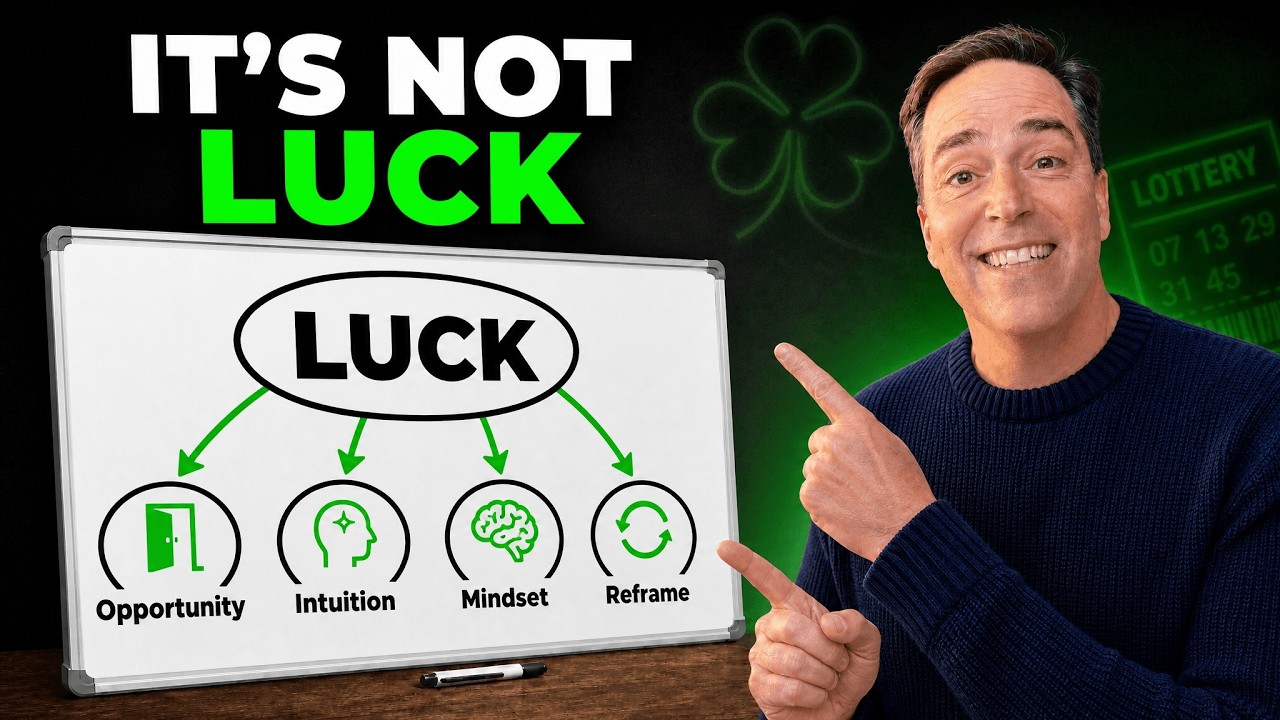
Which brings the accidents back around. Fleming could have washed the dish. Spencer could have just been annoyed about his pants. Silver could have written up the failed adhesive and moved on to the next project. The accident was never the invention. The noticing was. That's the same thing the luck research keeps finding, that the people who seem to get all the breaks are mostly just the ones paying enough attention to catch one when it lands in front of them.
Episode 113 of Sorta Sophisticated has the science behind that, including the newspaper experiment where people who called themselves unlucky walked straight past a half-page message offering them $250, and the birthday paradox that says 23 people is enough for a coincidence.
Watch the full episode here 👇 Lucky People Aren't Actually Luckier... Here's What They Do Differently (Episode 113)
